Buying Amish-built furniture in Charleston means ordering a piece that does not exist yet. You sit down with a furniture specialist, choose the wood, the finish, the hardware and the size, and a family workshop in Ohio, Pennsylvania or Indiana builds that piece for you in solid American hardwood. Charleston Amish Furniture then delivers it to the room it was made for. Built once. Kept for good.
What Buying Amish-Built Furniture Actually Means
Most furniture is sold the other way around. A store orders containers of finished pieces, you choose from whatever arrived, and the piece in the box is the piece you live with. Built to order reverses that. The dining table on the showroom floor is a sample of what a workshop can do, not the table that goes home with you. Yours gets built after you order it, in the wood and finish you picked, at the length your room can actually take.
That changes what a showroom visit is for. You are not shopping inventory; you are specifying a piece, closer to the way you would specify cabinets or countertops. A specialist measures the problem you are trying to solve, talks through the trade-offs, and writes the answer down. Before you decide anything, it helps to see how these pieces are made.
It also changes what you own at the end. Solid hardwood is thick enough to be sanded and refinished decades from now, and a solid wood drawer box can be taken apart and reglued instead of thrown out. Particleboard with a printed surface cannot be repaired that way. The difference shows up slowly, which is usually the moment people wish they had asked about it.
Who Builds It: Family Workshops in Ohio, Pennsylvania and Indiana
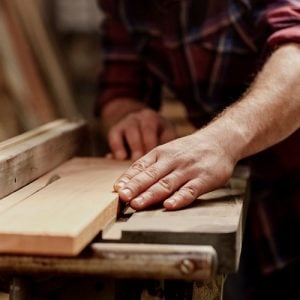
The hardwood pieces are built in Amish family workshops in three states: Ohio, Pennsylvania and Indiana. These are small shops, often a short walk from the family’s house, where a few woodworkers build a focused range of furniture and know every piece that leaves. They are working businesses, many run by families who have practiced the trade for generations.
Two things get misunderstood about them. The first is power. These workshops use machinery; what they do not take is the public electrical grid. Saws, planers, sanders and clamping presses run on diesel engines, hydraulic lines and compressed air generated at the shop. The second is scale. A piece is built in a small shop rather than moving down a production line, which is why a shop can lengthen your table or change its base without re-tooling anything, and why a build takes the time it takes.
Charleston Amish Furniture buys from shops it can name and visit, not from anonymous suppliers. Arista Wood is in Sugarcreek, Ohio. The Ohio Furniture Guild, a network of Ohio builders and finish shops, is based in Millersburg. FN Chairs is in LaGrange, Indiana. Troyer Design Company is another of the makers behind pieces on the floor. Ask which workshop built the bed you are standing next to and you will get a straight answer, though out of respect for those communities the conversation stays with the workshop rather than the individual woodworker. Look through the makers we buy from, or start with the Ohio Furniture Guild in Millersburg.
What Is Amish-Built in the Showroom, and What Is Not
Here is the part a lot of stores leave vague. The hardwood tables, beds, chests and casegoods are built to order in those Amish workshops. The upholstery and many of the accents are not, and they were never meant to be. They come from makers chosen for the same reasons: they build well, they last, and they let you specify.
Smith Brothers has built upholstered furniture in Berne, Indiana since 1926. Rowe has been in Salem, Virginia since 1946. Natuzzi builds leather upholstery in Italy. Uttermost supplies lamps, mirrors and accent pieces. LuxCraft, in Sugarcreek, Ohio, builds outdoor furniture from poly lumber made of recycled HDPE, a dense plastic lumber that never needs staining and shrugs off salt air. A sofa from Smith Brothers of Berne, Indiana is a very good sofa, and it is not Amish-built.
Knowing the difference is useful when you compare stores. Ask which specific pieces come from Amish shops, which shops those are, and where everything else was made. A store that can answer in that detail is a store that knows its own floor.
The Four Decisions You Make With a Specialist
However complicated a custom order sounds, it comes down to four choices, usually made in this order.
1. The wood
Nine hardwoods are available, including live edge slabs that keep the natural outline of the tree and reclaimed barnwood with its old nail holes and saw marks left in. Species differ in hardness, in grain, and in how they take a stain. Hardness is measured on the Janka scale, which records the force needed to press a steel ball into a board: a harder wood resists dents from chair legs and dropped pans, while a softer one marks more easily and collects family history sooner. Which of those you want is a question about your house, not about the wood.
2. The finish
More than 180 finishes are on hand, and a color you bring in can be matched. The same table in a pale natural finish and in a near-black one reads as two different pieces of furniture. Finish also decides how much grain you see; some let the figure of the wood show through, others close it down. Carry the samples to a window, and take them home if you can, because showroom light and a Lowcountry afternoon are not the same light. The finish library is worth an unhurried half hour.
3. The hardware
More than a thousand hardware styles are available, and nothing dates a piece faster than a pull that belongs to another decade. Hardware is also the easiest of the four decisions to change your mind about later, which makes it a good place to be a little bold.
4. The size
This is the decision that justifies the whole process. Charleston houses are full of rooms that standard sizing fights with: a single house dining room that is long and narrow, a Mount Pleasant bedroom with a window exactly where a tall chest wants to stand, a stair turn that has defeated more than one sofa. Built to order means the table is the length of your room, the chest is the height your ceiling allows, and the bed fits the wall you actually have.
Design help is complimentary, in the showroom or at your house, and you leave with the specification in writing along with the build time for your order.
What a Drawer Tells You About the Build
You do not need to be a woodworker to judge furniture. You need a flashlight and permission to open things, and in a showroom that welcomes it you have both.
Pull a drawer all the way out. Look at how the corners are joined, whether the drawer box is solid wood or a wrapped panel, and whether the bottom sits in a groove or is stapled to the underside. Turn the drawer over. Look at the back of the case, the part nobody designs for show. Run a hand under the tabletop to feel whether it is finished there too. Lift one end of a chair and notice what it weighs.
Those checks are the subject of our solid wood chest of drawers buying guide, which goes through woods, joinery and drawer boxes in detail. They matter most on bedroom storage, where a drawer gets opened twice a day for thirty years. If you are still working out which case piece your room needs first, sizing a tall chest for a Charleston bedroom covers the height and footprint question.
What Built to Order Means for Timing
A built-to-order piece is not sitting in a warehouse, so there is a wait, and anyone who quotes you a universal number is guessing. Build time depends on the shop, the wood, the finish and the season, so it is given per order: your specialist writes the current build time for your configuration on your paperwork before you commit to anything.
Two practical notes. If a piece is meant for a holiday or a guest visit, start the conversation early so the build time fits the date. And if a deadline truly will not bend, say so in the first conversation; that is a much easier problem to solve at the beginning than at the end.
Delivery and Setup Across the Lowcountry
Every piece is inspected before it ships. When it arrives, a white-glove team carries it into the room it was made for, assembles it there and sets it in place, rather than leaving a crate in the driveway. For a long dining table or a tall chest going up a Charleston staircase, that is not a flourish; it is the difference between a good day and a gouged stair rail.
Delivery covers the Lowcountry; call to confirm your address. The design help and white-glove delivery page sets out what the team does on the day.
How Pricing and Payment Work
Nothing is priced on the website, and that is not coyness. A table in one wood, finish and size is a different piece of furniture from the same table in another, so a list of standard prices would describe furniture the store does not sell. Your specialist prices the configuration you actually chose, and you see that number before anything is ordered.
Special financing is available with approved credit through a store credit card issued by Wells Fargo Bank, N.A. Offers change, so a specialist explains what is current rather than leaving you to decode a footnote; the financing page gives the general outline. Guardsman protection plans are available as well, and the most popular five-year plan covers up to $30,000 of furniture, which is worth a conversation for a dining table that will be doing homework duty for a decade.
Living With Solid Hardwood in Lowcountry Humidity
Solid wood responds to the air around it. It takes on moisture in a humid August and gives it back in a dry, heated January, which means a tabletop can be very slightly wider in summer than in winter. Well-built furniture is made to allow that movement. Your part is to keep conditions from swinging hard: keep relative humidity between 25 and 45 percent, with air conditioning in summer and a humidifier in winter, rather than shutting the house up for weeks, keep pieces out of direct sunlight, and do not park a chest against a wall where a vent blows straight at it.
Day to day, dust with a slightly damp cloth along the grain, blot spills right away rather than wiping them, polish about once a month with a wax-free, silicone-free polish, and put something under anything hot, wet or sharp-cornered. Our furniture care guide is the reference to follow for cleaners and for specific finishes. Out on the porch or the dock, poly lumber and Sunbrella fabrics take sun, salt and humidity without the annual sanding a wooden Adirondack chair asks for, which is what the LuxCraft outdoor collection is built for.
Designers, Offices and Trade Buyers
Not every order is a family dining table. A trade program serves designers, stagers, architects and builders who need samples, custom dimensions and honest lead times for a client’s project, and a commercial division handles conference tables, reception pieces and office seating. The same four decisions apply; the paperwork and the schedule are simply built for a project rather than a household. Browsing the collections on the floor is the fastest way to see the range before a first meeting.
Planning a Visit to the West Ashley Showroom
The showroom is at 1750 Sam Rittenberg Boulevard in West Ashley, Charleston, and it holds 35,000 square feet of furniture, which is enough room to see a piece in several woods and finishes instead of imagining it. Hours are Monday through Saturday, 10am to 6pm, closed Sunday, and the phone number is (843) 225-2513. The team has more than 100 combined years in home furnishings between them, and more than 170 positive reviews across Google, Facebook and Yelp describe what that is like to deal with; what customers say about the experience is a fair way to check this page against reality.
The family opened its first store in Landrum, South Carolina in 2005 and the Charleston showroom in 2017, which is how a store from the Upstate ended up in West Ashley.
Bring three things and the visit will earn its drive: the dimensions of your room, photos of the space including the doorways and the stair, and a swatch or paint chip of whatever the piece has to live beside. Then take your time. This is furniture you are choosing once, and nobody here is going to hurry you through it. When you are ready, get in touch with the showroom to set up a time, or to ask a question before you drive over.
Frequently asked questions
Do Amish workshops use power tools?
Yes. The shops in Ohio, Pennsylvania and Indiana run saws, planers, sanders and clamping presses; what they generally stay off is the public electrical grid, so that machinery is driven by diesel engines, hydraulic lines and compressed air generated at the shop. The picture to hold is ordinary woodworking machinery in the hands of a small team, not a long assembly line.
Which pieces at Charleston Amish Furniture are built by Amish workshops?
The solid hardwood furniture, meaning tables, beds, chests and other casegoods, is built to order in Amish family workshops in Ohio, Pennsylvania and Indiana. Upholstery and accents come from other makers, including Smith Brothers of Berne, Indiana, Rowe of Salem, Virginia, Natuzzi in Italy and Uttermost, and outdoor poly furniture comes from LuxCraft. A specialist can tell you which shop is behind any piece on the floor.
Can I order a table or chest in a size that is not standard?
Yes. Size is one of the four decisions you make with a specialist, along with the wood, the finish and the hardware. Because the piece is built after you order it, length, width, height and details such as drawer configuration are set for your room rather than for a catalog. Bring the room’s dimensions and photos of the doorways and stairs to the first conversation.
How long does built-to-order furniture take to arrive?
There is no single answer, and a store that gives you one is guessing. Build time depends on the workshop, the wood, the finish and the time of year, so it is quoted per order and written on your specification before you commit to anything. Ask for it in the first meeting if a date matters to you.
Does Charleston Amish Furniture deliver outside the city?
Yes. White-glove delivery covers the Lowcountry, and the team carries the piece into the room, assembles it and sets it in place. Call (843) 225-2513 with your address if you want to confirm that it falls inside the delivery area.