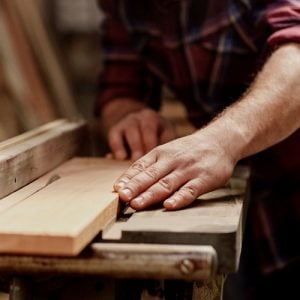
White-glove furniture delivery Lowcountry-wide means your piece is carried into the room where it will live, assembled, and left ready to use — not dropped at the curb in a carton. At Charleston Amish Furniture, pieces are inspected before shipping, then delivered to the room and set up by a white-glove team. Here is what the day looks like, what to do before it, and what to expect once the truck pulls away.
What White-Glove Furniture Delivery Means in the Lowcountry
Three very different services go by the word delivery, and the difference shows up on the heaviest, most considered piece in the house. The terms are not standardized across the furniture business, so it is worth asking any store which one you are actually buying.
| Level of service | What usually happens | What you are left to do |
|---|---|---|
| Curbside | Cartons come off the truck at the end of the driveway | Carry it in, unpack it, put it together, get rid of the packaging |
| Threshold | Cartons come just inside the front door or into the garage | Move it to the room, unpack it, put it together |
| White-glove | The piece is brought to the room, unpacked, assembled and placed | Decide where it goes and look it over |
Delivery from Charleston Amish Furniture is the third kind. A piece is inspected before it ships, carried to the room you chose, assembled and set where you want it. Nobody leaves you alone in the driveway with a crate, a box cutter and a hex key.
That is less about pampering than about physics. A solid hardwood table is heavy, the finish is the last thing anyone wants to scuff, and a crate dragged across brick and down a hallway is where damage happens. If you want the longer version of how a built-to-order piece differs from one pulled off a warehouse shelf, read what makes the showroom different.
Why Solid Hardwood Has to Be Moved Differently
The furniture built for Charleston Amish Furniture comes from Amish family workshops in Ohio, Pennsylvania and Indiana, in small shops rather than on a production line. It is made from solid American hardwood — nine species, including live edge slabs and reclaimed barnwood — and it is built heavy on purpose.
Two details explain most of the care a delivery takes. The first is joinery. A mortise-and-tenon joint is a shaped tongue cut on one piece of wood and fitted into a matching slot in another, which is what keeps a trestle table rigid for decades. Dovetailed drawers interlock the same way. These joints are strong in the directions they were designed for, and unhappy when a table is lifted by its top or a dresser is dragged by one corner.
The second is the finish. A hand-applied finish on a wide top is a surface you will look at every day for thirty years, and it marks the way a car hood marks: a belt buckle, a zipper, a watch clasp, a ring on a finger. Trained movers carry and pad. They do not slide.
Weight varies enormously by species, which is worth knowing before you pick one. Our guide to which woods hold up best in Charleston's humidity walks through oak, cherry, walnut, maple and hickory and what each is like to live with.
Before the Truck: What Gets Settled the Day You Order
A delivery goes smoothly or badly based on decisions made long before it, at a table in the showroom with a furniture specialist. That session is where the piece is specified: the wood, the finish, the hardware, the fabric or leather, and the size.
The range is wide — 180 or more finishes, or a color matched to something you bring in, more than a thousand hardware styles, and more than 2,300 fabrics and leathers. Design help is complimentary, in the showroom or in your own home, and you leave with a written specification and a build time for your order.
Note that it is a build time for your order, not a figure off a chart. Each piece is made after you order it, so the timeline is confirmed with you rather than promised in advance, and your specialist keeps you posted as the order moves. Ask at that session how delivery gets scheduled, so the date lands in a week you are home.
This is also the point to raise anything unusual about your house: a tight stairwell, a gate code, a long walk from the street, a second-floor room. It is far easier to plan around before the piece is built. If you are still weighing options, built to order or off the floor covers how the two choices differ once you live with the piece, and choosing an Amish dining table in Charleston works through wood, finish and size in order. You can also look through the collections on the showroom floor before you drive over.
Measure the Path In, Not Just the Room
Almost every delivery problem is a measuring problem, and it is rarely the room that causes it. The room is big enough. The way in is not.
Before delivery day, walk the route with a tape measure and write down five numbers:
- Doorway width — measure the clear opening with the door standing open, from the stop to the far jamb, not the outside edge of the frame.
- Hallway width and turns — a hall that fits a sofa in a straight line can still defeat it at a ninety-degree corner.
- Stair landing and ceiling height — the pinch point on stairs is usually the headroom at the turn, not the width of the tread.
- Railing to wall — on a piazza stair or an interior run, the railing takes several inches off the usable width.
- Elevator car and door — in a condo, the depth of the car and the height of the door both matter, and a tall headboard often has to go up the stairs instead.
Then compare the diagonal of the piece with the diagonal of the opening, because that is how a large item actually goes through a door. Your specialist has the dimensions of what you ordered and can tell you whether a table top needs to come in on edge or a sofa needs its legs off.
While the tape is out, check the room itself. A dining table wants about three feet of clearance behind each chair so people can push back and stand, and a little more where someone has to walk behind a seated guest.
Lowcountry Addresses That Need a Little More Planning
Delivering across the Lowcountry is not the same as delivering across a flat inland subdivision. The houses here are older, taller, narrower and sometimes up on stilts.
A Charleston single house has its front door on the piazza, which means a flight of exterior steps and a turn before anything reaches the hall. A raised cottage near Folly Beach adds a long outside staircase and salt-damp railings. Downtown streets restrict where a truck can legally stop and for how long. Many island and gated neighborhoods want a vehicle pass or an advance call to the gate, and some set their own delivery windows, so check with your property manager or association before the day. Old Village porches in Mount Pleasant, low-limbed streets in Summerville and narrow lanes on Johns Island each have their own version of this.
None of it is a problem when the showroom knows in advance. All of it is a problem at eight in the morning with a truck idling at the curb.
Outdoor furniture is its own case. Poly lumber from LuxCraft, built from recycled HDPE — the dense plastic used for milk jugs — is made for salt air, sun and humidity and pairs with Sunbrella cushions. A porch set still has to get through a gate and around a pool enclosure, so measure the gate, not just the porch.
What Happens When the Team Arrives
Your part on the day is mostly finished before anyone knocks. Clear the route: shoes, toys, rugs that slide, and anything hanging on a wall the piece has to pass. Put pets in a closed room, because open front doors and cats are a bad combination. Have an adult at home who can make decisions.
The team brings the piece to the room you specified, unpacks it, assembles what needs assembling — a trestle base to a top, a bed’s rails to its headboard, a hutch to its base — and sets it in place. If your table has leaves, that is the moment to fit and check them, rather than discovering a problem the night before Thanksgiving.
Then look at it properly, in daylight rather than lamp light. Run your hand across the top. Open every drawer and door. Check that the piece sits flat, that a table does not rock, that the finish is the one you specified. Lowcountry floors are rarely level, and a shim under one foot is a thirty-second fix while someone is standing there.
If something is not right, say so at the time and call your specialist. The first store opened in 2005 and the Charleston showroom in 2017, and more than 170 positive reviews have come in across Google, Facebook and Yelp since. That happens by hearing about a problem early rather than months later.
Where the Piece Goes, and Why That Choice Lasts
Decide the spot before the truck comes, because once a loaded eight-foot table is placed, nobody wants to move it on a whim. Three things should shape the decision, and all three are about the Lowcountry climate rather than the floor plan.
Keep solid wood out of direct, sustained sunlight. Southern and western windows here deliver hours of hard afternoon light, and a sunbeam that falls across one half of a table top will, over seasons, color that half differently from the rest. Sheer shades or a shifted placement solve it.
Keep the piece away from what the air handler is doing. A supply vent blowing cold dry air straight at a cabinet door, or a return pulling across the end of a table, creates a dry spot the rest of the piece does not share, and uneven moisture is what moves wood. The same goes for a fireplace or a space heater.
Leave some air behind it. A dresser shoved flush against an exterior wall in a humid house gives moisture nowhere to go, and an inch or two of gap is enough. Our furniture care guide covers the cleaning routine that goes with all of this, including what not to use on a hand-applied finish.
The First Weeks: Letting the Wood Settle Into Your House
A solid wood piece is not done adjusting the moment the truck leaves. Wood takes on and gives off moisture with the air around it, which is why solid hardwood furniture behaves one way in a Charleston August and another in a dry January house with the heat running.
Expect small, normal changes. A wide top can gain or lose a hair of width across the seasons. A drawer that glides in October can feel snug in July. A table leaf stored in a closet on the far side of the house can come back slightly out of step with the top, which is why leaves are best kept in the same room, lying flat and out of the sun.
The remedy for nearly all of it is dull and effective: hold the house at a steady temperature and humidity rather than swinging between extremes, and do not shut the air off entirely in an empty beach house in August. Keeping solid wood steady through a Lowcountry year goes deeper into humidity, heat and sunlight.
One more first-week habit: use the piece, and protect it while you do. Felt pads under lamps and decor, coasters on the table, a place mat under anything hot. A finish is tough, not invincible.
Protection Plans, Paperwork and Paying for It
Two practical things get settled alongside the order rather than on the doorstep.
The first is protection. Guardsman protection plans are available on furniture bought here, and the most popular one is a five-year plan covering up to $30,000 of furniture. What a plan covers and what it leaves out is worth reading through with your specialist before you decide, particularly which kinds of accidental damage are included.
The second is payment. A store credit card issued by Wells Fargo Bank, N.A. is available with approved credit, and special financing offers change over time, so a specialist explains the current ones in store rather than online. The financing page is the starting point, and the showroom can walk you through what applies to your order.
Worth saying plainly: not everything on the floor is Amish-built. The solid hardwood dining and bedroom pieces are, while upholstery and accents come from makers such as Smith Brothers in Berne, Indiana, Rowe in Salem, Virginia, Natuzzi in Italy, Uttermost, and LuxCraft for outdoor poly. Each is named for what it is, and each carries its own delivery considerations.
Planning Your Delivery Day with Charleston Amish Furniture
A delivery that goes well is one that got discussed twice: once when the piece was specified, and once in the days before it arrives. If you are at the beginning of that process rather than the end, the showroom at 1750 Sam Rittenberg Boulevard in West Ashley is open Monday through Saturday, 10am to 6pm, and closed Sunday. There are 35,000 square feet of floor to walk, and a team with more than a hundred combined years in home furnishings to walk it with you.
Bring photos of the room, your measurements, and anything you are matching — a floor sample, a paint chip, a piece of fabric. What to bring on a first Saturday at the showroom covers it in more detail, including what the first ten minutes look like.
When you are ready to talk through a piece, a room, or an address that needs special handling, call (843) 225-2513 or get in touch with the West Ashley showroom. Built once, kept for good — and carried in by people who treat it that way.
Frequently asked questions
Is white-glove furniture delivery worth paying for?
For a solid hardwood piece, almost always. The difference is not comfort but risk: a heavy table or hutch carried by trained movers, padded and assembled in the room, is far less likely to be scratched, racked or dropped than one you wrestle up a piazza stair yourself. It also means the piece is set up and sitting level before anyone leaves, so you find out on the spot if something needs attention. For a small accent piece you can carry alone, a lighter level of service may be all you need.
How much does white-glove furniture delivery cost?
Nothing at Charleston Amish Furniture is priced online, and that includes delivery. What a delivery involves depends on the piece, where it is going and what it takes to get it inside, so it is quoted with your order rather than read off a chart. Ask your furniture specialist when you specify the piece, and you will have the figure in writing well before delivery day.
Are you supposed to tip for white-glove furniture delivery?
Tipping is entirely at your discretion and is never required. Plenty of customers offer the crew cold drinks on a hot Lowcountry afternoon and plenty do not, and neither one changes the care your piece receives. If you want to recognize a good delivery in a way that lasts, a review that describes what the team did is worth more than cash.
Why does white-glove delivery cost more than curbside drop-off?
Because it is a different job. Curbside is one stop and a tailgate. White-glove means trained movers, protective padding, time spent inside your home, stairs and corners to work around, assembly, placement and a final look at the piece. The labor hours and the training behind them are the cost, and on furniture built to be handed down they are usually the cheapest insurance available.
Do you deliver outside of Charleston?
Yes. Charleston Amish Furniture offers white-glove delivery across the Lowcountry from the West Ashley showroom, which takes in Mount Pleasant, Summerville, James Island and the surrounding islands. If your address sits on the far side of a gate, a bridge or a ferry, call the showroom at (843) 225-2513 and a specialist will confirm what is involved for your location before you order.